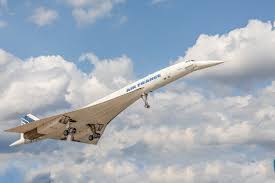
On this day in history, January 9, 1969, aviation entered a bold new era with the first test flight of Concorde, the world’s first successful supersonic passenger aircraft. Taking off from Toulouse-Blagnac Airport in southern France, the sleek white prototype Concorde 001 lifted into the sky at 11:40 a.m., marking a major milestone in aerospace engineering and international cooperation.
Concorde was the product of an ambitious joint venture between Britain and France, symbolizing postwar European collaboration at the height of the Cold War. Designed to fly at more than twice the speed of sound (over Mach 2) the aircraft promised to dramatically reduce transatlantic travel times, cutting the journey from London or Paris to New York to just over three hours. Although the inaugural test flight remained subsonic and lasted only 27 minutes, it demonstrated that the revolutionary delta-wing design and advanced systems functioned as intended.
Test pilot André Turcat commanded the flight, accompanied by engineer Jacques Guignard. Their calm and precise handling reassured observers that the aircraft’s radical design could be controlled safely. The flight was closely watched by engineers, government officials, and aviation enthusiasts around the world, many of whom viewed Concorde as a glimpse into the future of commercial air travel.
In the years that followed, Concorde would become an icon of speed, luxury, and technological prowess. It entered commercial service in 1976 and operated for nearly three decades, carrying passengers at 60,000 feet while cruising faster than a rifle bullet. Despite its eventual retirement in 2003 due to high costs, environmental concerns, and limited routes, Concorde’s legacy endures.