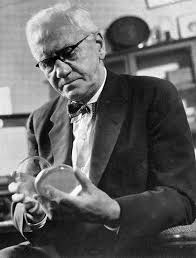
Sir Alexander Fleming is remembered around the world as one of the most influential figures in modern medicine. Best known for his discovery of penicillin, Fleming’s work transformed the treatment of bacterial infections and has saved countless lives. Yet beyond the laboratory, Fleming was also a committed Freemason, and the values of Freemasonry helped shape the character, humility, and sense of service that defined his life and legacy.
Born in Scotland in 1881, Fleming pursued a career in medicine and research, eventually joining St. Mary’s Hospital Medical School in London. In 1928, his accidental observation that mold had killed bacteria in a culture dish led to the discovery of penicillin. Although it would take years of further research to develop penicillin into a usable drug, Fleming’s insight laid the foundation for the antibiotic age. For this achievement, he was knighted in 1944 and awarded the Nobel Prize in Physiology or Medicine in 1945.
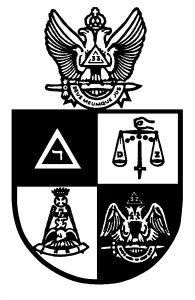
Fleming was initiated into Freemasonry in London, where he became an active and respected member of the Craft. His Masonic involvement was not one of public display, but of quiet dedication, much like his scientific career. He exemplified Masonic ideals through his commitment to truth, education, and the betterment of humanity. Fellow Masons noted his modesty, integrity, and belief that knowledge carried a moral responsibility.
Central to both Fleming’s scientific work and his Masonic philosophy was humility. Despite his fame, he consistently emphasized that penicillin was not a personal triumph but a gift of nature discovered through careful observation. This outlook closely mirrors the Masonic teaching that individuals are merely instruments in a greater work and that credit belongs not to ego, but to purpose and principle.