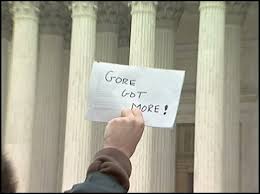
On this day in history, December 12, 2000, the United States Supreme Court delivered one of its most consequential and controversial decisions: Bush v. Gore. The ruling effectively ended the disputed 2000 presidential election and determined the next President of the United States. After weeks of national uncertainty, legal battles, and recounts in Florida, the Court’s decision halted the manual recount ordered by the Florida Supreme Court, giving Texas Governor George W. Bush the victory over Vice President Al Gore.
The controversy began on Election Night, when the results in Florida were too close to call. With the presidency hinging on the state’s 25 electoral votes, both campaigns launched legal challenges. The focus quickly turned to recount procedures, ballot design, and differing county standards, especially the now-famous “hanging chads” on punch-card ballots. Florida’s Supreme Court ordered a statewide manual recount, but the Bush campaign appealed to the U.S. Supreme Court, arguing that the recount violated the Equal Protection Clause of the Fourteenth Amendment due to inconsistent counting methods across counties.
In a 7–2 ruling, the Supreme Court agreed that the recount method was unconstitutional. In a narrower 5–4 decision, the Court held that no constitutionally valid recount could be completed by the state’s December 12 “safe harbor” deadline. With the deadline passed and the recount stopped, Florida’s previously certified results, showing Bush ahead by just 537 votes—stood. The ruling ensured that Bush would receive Florida’s electoral votes and become the 43rd President of the United States.
The decision immediately sparked intense national debate. Supporters argued that the Court had preserved constitutional order and prevented an arbitrary recount, while critics contended that the Court had inserted itself into a political process and undermined confidence in democratic institutions. Bush v. Gore remains one of the most controversial Supreme Court decisions in modern history, cited today in discussions of election law, judicial power, and the importance of clear voting procedures.