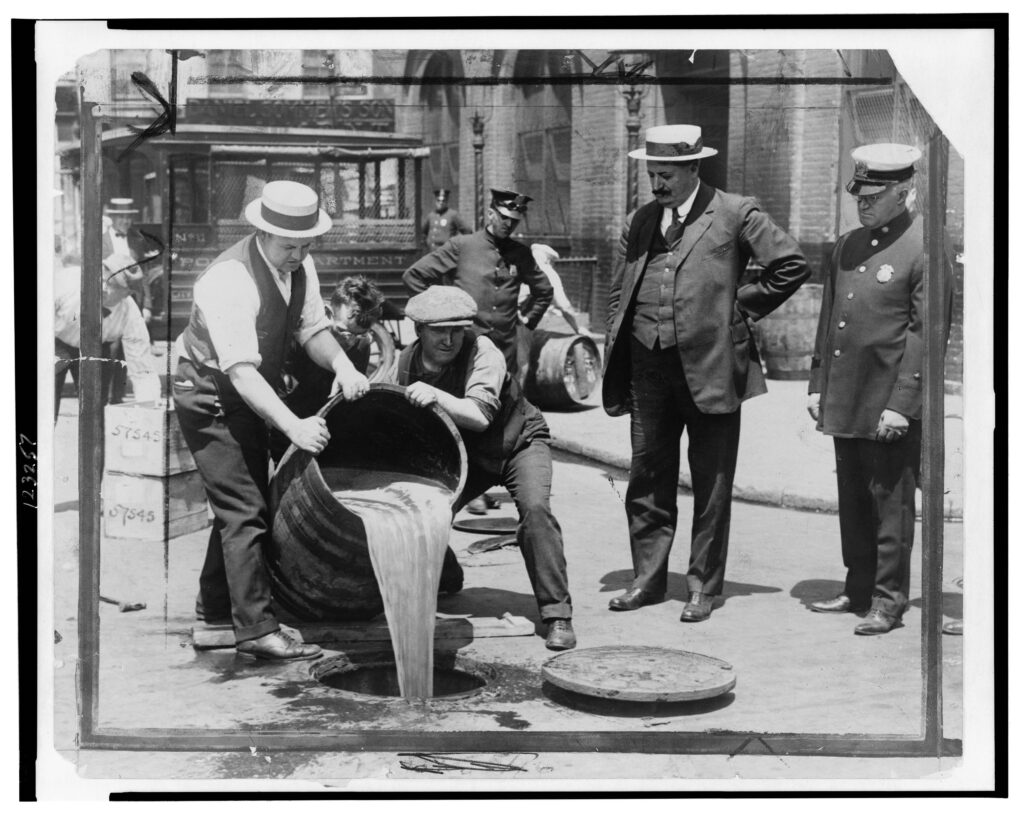
On this day in history, the United States closed the chapter on one of its most ambitious and controversial social experiments when Prohibition officially came to an end. On December 5, 1933, the Twenty First Amendment was ratified, repealing the Eighteenth Amendment and bringing a nationwide halt to the ban on the manufacture, sale, and transportation of alcohol. For thirteen years, Prohibition had shaped American society, politics, and culture in profound and often unexpected ways. Its repeal marked a turning point that reflected the nation’s shifting attitudes and the complex realities of enforcing such a sweeping law.
When Prohibition began in 1920, supporters believed removing alcohol from public life would reduce crime, improve morality, and strengthen families. Instead, it produced the opposite effect in many areas. Illegal speakeasies flourished, organized crime syndicates grew more powerful, and bootlegging became a widespread underground enterprise. Law enforcement struggled to keep pace with the illicit trade, and the federal government faced mounting costs as it tried to uphold the ban. Public opinion gradually shifted as many Americans came to see Prohibition as ineffective and increasingly out of touch with daily life.
The Great Depression added further pressure. Repealing Prohibition promised new jobs, revived industries, and increased tax revenue at a time when the country desperately needed economic recovery. By 1933, a strong majority of Americans supported repeal, and Congress moved swiftly to allow states to determine their own alcohol regulations. Celebrations erupted nationwide when the Twenty First Amendment was officially certified, signaling relief and a sense of national renewal.
The end of Prohibition did more than reintroduce legal alcohol. It reshaped federal and state powers, transformed the brewing and distilling industries, and influenced how the government approached future attempts at legislating personal behavior.